
What’s all the fuss about phones with a curved screen?

We first saw a curved phone back in 2012 with the launch of the Samsung Galaxy Round, a smartphone which curved to the shape of your hand. And since then, a number of similar curved screen smartphones have hit the shelves, not to mention the arrival of the curved TV screen too.
So with the curved screen phone and TV trend well and truly taking off, we’ve come to ask the question what’s the point in a curved screen, and how does it benefit our handheld devices?
The science behind the curved phone
Whilst you might think the curved screen phone is just a fad, there’s definitely method in the madness when it comes to the technology behind the G Flex 2 and Galaxy Note Edge.
Great for watching TV
First off the mark, phones with curved screens are the perfect accompaniment for any film or movie buff. Whilst most new phones are getting bigger and bigger, making TV easier to watch on the go, the nature of the curved screen phone makes catching up on the latest episode of Eastenders or Broadchurch an ever better experience.

Perfect for gamers
As with TVs, curved screen phones actually reduce reflections and let you get fully immersed into whatever you’re watching- or playing- which leads us onto the benefits of a curved screen phone for gaming.
With the shape of the handset being modelled more like a games controller, it means not only is the viewing experience much better on a curved phone compared to a traditional flat one, but it’s also easier to grip. So if you’re a serial gamer, a curved screen phone just, well, makes sense.
Curved vs flexible screen
With everyone talking about a curved vs flexible display, it’s hard to work out what the difference is.
Now this is where it gets ever so slightly technical; the term flexible refers to the organic light-emitting diode (or OLED) which sits underneath your phone’s glass screen. If this is made from flexible materials like plastic, then it allows the display to have a slight curvature to it- presenting the LG G Flex 2 and Samsung Galaxy Round.
But don’t go trying to bend your smartphone in half! Just because your curved screen phone is considered ‘flexible’ by the technical guys at Samsung and LG, it doesn’t mean it’s foldable. You might want to come back in 2020 for technology like that…
Want a phone that does fold in half? Why not reminisce over these top flip phones of all time!
LG G Flex 2
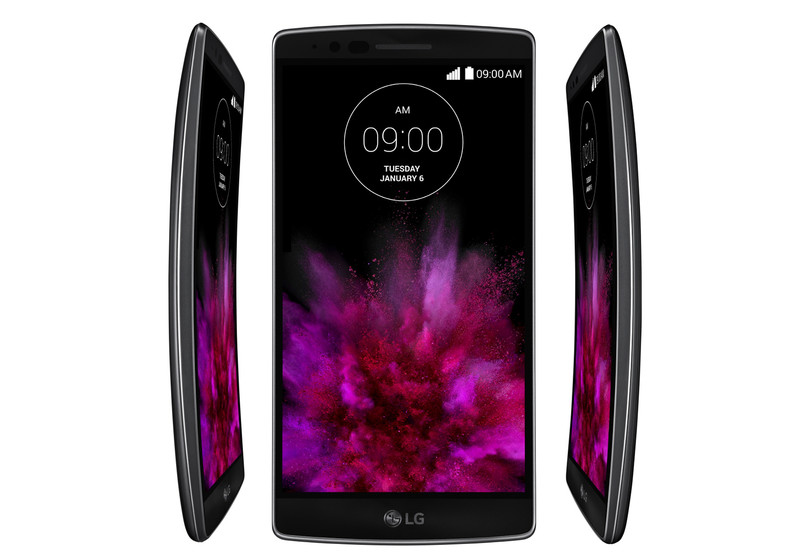
Fancy getting yourself your very own curved screen phone? LG has just launched its latest model to the list in the shape of the LG G Flex 2.
This LG curved phone, as you might have guessed from the name, is the second handset with a flexible screen following on from the original LG G Flex, and actually comes in at half an inch smaller thanks to its 5.5-inch display.
With the LG curved screen aside, the G Flex 2 even features a self-healing coating which patches up scuffs in less than 10 seconds flat, making it almost 100% scratch resistant!
Why not grab yourself an LG G Flex free of charge on a 24 month contract?
The Samsung curved phone: Galaxy Round and the Galaxy Note Edge

Although the LG G Flex 2 is new to our shelves, it’s Samsung which has led the way when it comes to phones and TVs with flexible screens.
The imaginatively named Galaxy Round was the first curved screen phone to hit the market, which has now been followed up by the Galaxy Note Edge, a flexible display smartphone with a difference.
Whilst the Galaxy Round bent widthways to mirror the natural curve of your hand, the Note Edge display stretches in the opposite direction, allowing you to make even more of its larger than life screen. As you can see, Samsung has put all of your most handy icons in easy reach of your thumb (unless you’re left handed of course!), making it quicker than ever to multitask.
If you want to get your hands on the ultra desirable Galaxy Note Edge, you can pick one up on contract today.
Find out exactly why we love the curved screen on the Samsung Galaxy Note Edge here!
Where will future phones take us?
If you’d have told us a couple of years ago that there would be not one but four curved screen devices out in the people’s pockets, we would have laughed at the thought. So with the concept becoming a mainstream phenomenon, where will curved screen technology leave us in the future?

Samsung has already previewed tech that’s actually flexible, bendable and foldable, which could totally revolutionise where our smartphones and wearables end up. Devices that can be bent to fit into even the tightest pair of jeans, or wrapped around your wrist like a smart bracelet or smartwatch could well become a reality in future wearable tech.
Want to find out more about what smartphones will look like in the future?